Middle East Escalation Sends Oil Higher as Traders Price in Supply Risk
Richard Smith
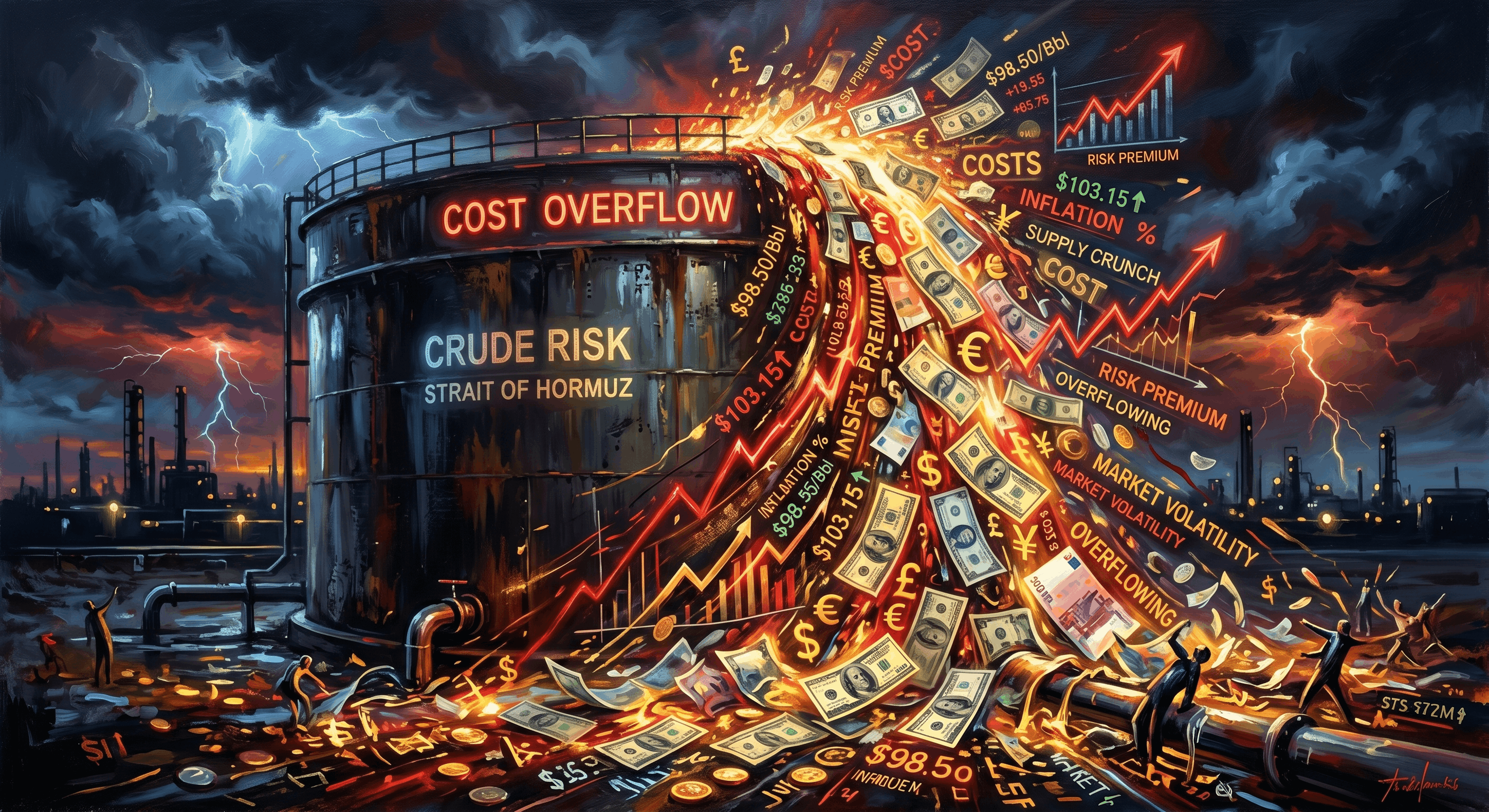
Escalating conflict in the Middle East has triggered a sharp repricing of global energy risk, with Brent crude hovering near the $100 mark following disruptions in the Strait of Hormuz. Traders are currently pricing in a persistent risk premium as a "supply crunch" replaces hopes for a quick resolution.
Escalating conflict in the Middle East has become the dominant driver across global markets, with traders sharply repricing energy risk as hopes for a quick resolution fade. Reuters reported that oil moved higher as investors worried about supply through the Strait of Hormuz, a chokepoint that remains central to the global crude trade.
The immediate market reaction has been classic risk-off: crude gained on supply fears, energy equities outperformed, and broader stock indices came under pressure as investors rotated toward defensive assets. Reuters noted that oil prices rose after Iran set fire to a UAE oil port and struck vessels in the Strait of Hormuz, while another Reuters market note said global equities softened as Brent hovered near $100 a barrel on renewed hostilities.
From a trader’s perspective, the key issue is not just the headline spike in crude, but the possibility of a persistent risk premium staying embedded in the market. Reuters has also reported that Brent has already swung violently during the conflict, and that the Strait of Hormuz disruption has triggered an unprecedented supply crunch, with volatility now likely to matter more than a one-way move higher in prices.
Market setup
For crude traders, the first levels to watch are the recent highs and whether Brent can hold above the psychologically important $100 area. If supply disruption worsens, momentum buyers may keep chasing upside, while any ceasefire headlines could trigger sharp profit-taking and a fast reversal lower.
In equities, the impact is likely to be sector-specific. Energy producers and tanker-related names should remain supported by higher realized prices and freight stress, while airlines, transport, chemicals, and consumer discretionary stocks remain most exposed to margin pressure from more expensive fuel.
Macro spillovers
The larger macro risk is inflation. Higher oil prices can feed quickly into transport, shipping, and manufacturing costs, which raises the odds that central banks stay cautious for longer. Bond markets are already sensitive to that possibility, since a sustained energy shock can keep yields elevated and tighten financial conditions across risk assets.
Currency markets are also likely to reflect the shock. The U.S. dollar typically benefits from safe-haven demand during geopolitical stress, while oil-importing economies can face pressure through wider trade deficits and weaker local currencies.
Trading lens
A trader’s playbook here is straightforward: watch Brent and WTI for continuation versus exhaustion, monitor defense in energy stocks, and stay alert to headline risk around the Strait of Hormuz. If tensions ease, the unwind could be just as fast as the squeeze, especially in crowded energy longs.
The broader message is that this is no longer just an oil story. It is a cross-asset shock affecting crude, inflation expectations, equities, bonds, and FX at the same time.