Fragile U.S.-Iran Ceasefire Sparks Relief Rally, Sending S&P 500 Toward Record Highs
Richard Smith
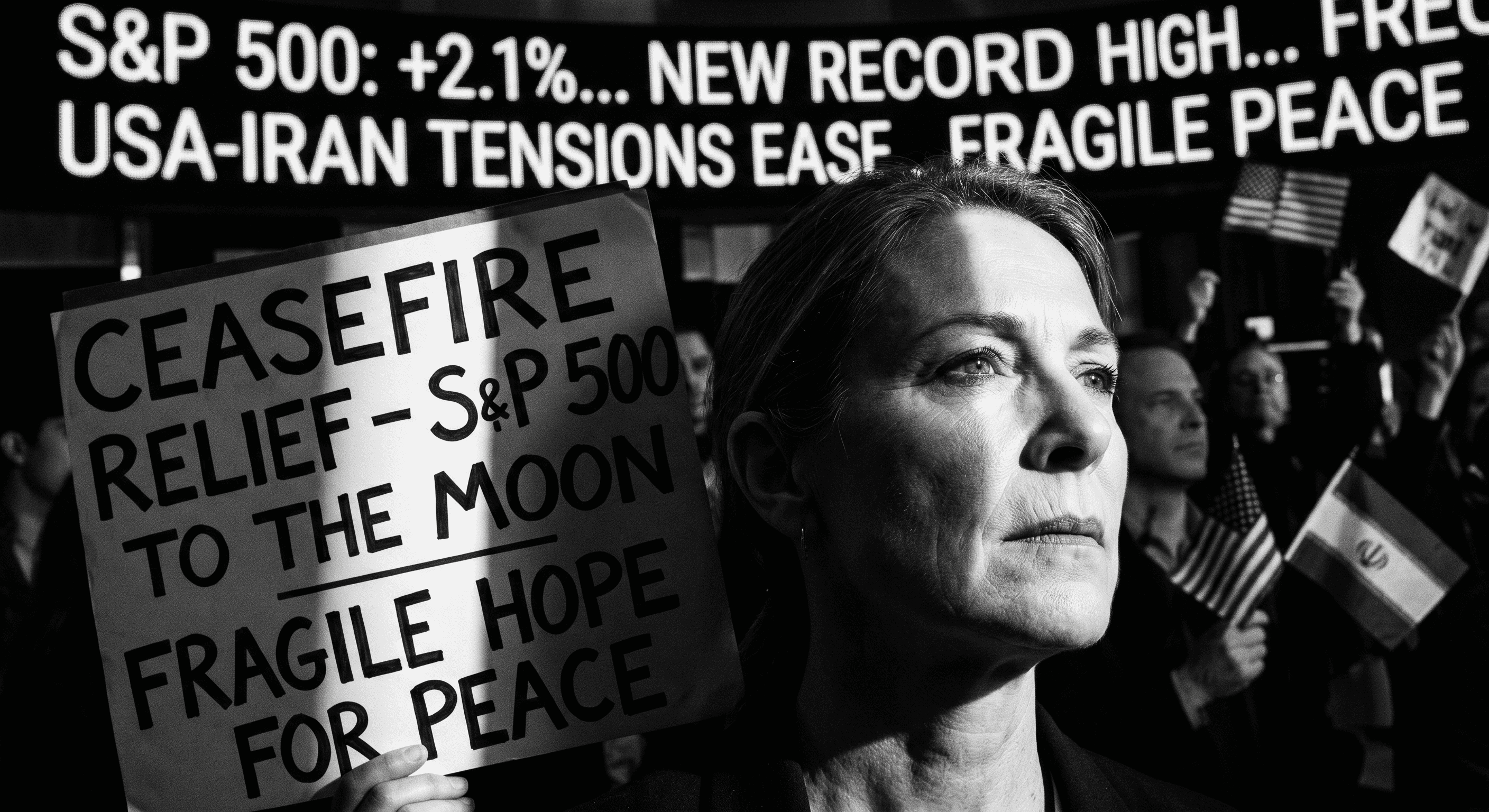
A temporary two-week ceasefire between the U.S. and Iran, including reopening of the Strait of Hormuz, has sparked relief rallies across global markets, with the S&P 500 up over 1% on April 14 nearing its January record of ~7,002, Nasdaq gaining for 9-10 straight sessions, and oil plunging 15% in its biggest drop since 2020 as supply fears ease.
Global markets have experienced a dramatic reversal this week following the announcement of a fragile, two-week ceasefire between the United States and Iran. The diplomatic pause, which includes conditional agreements to reopen the heavily contested Strait of Hormuz, has rapidly deflated the geopolitical risk premium that had been suffocating global equities and supercharging energy costs for the past month.
For weeks, the escalating conflict had threatened a worst-case stagflation scenario, cutting off nearly 20% of the world's daily oil supply. The sudden shift toward de-escalation has triggered a massive "risk-on" rotation across asset classes. Investors rushed to price in a normalized supply chain, sending crude oil plummeting in its sharpest decline since the 2020 pandemic, while equities surged on the prospect of lower inflation and sustained corporate earnings growth.
While diplomats race to formalize a longer-term resolution in Islamabad before the temporary truce expires, the immediate financial reaction has been undeniably euphoric.
How the Ceasefire Impacted Global Markets
The two-week diplomatic pause acted as a pressure release valve for the global economy. Here is a breakdown of how the ceasefire rippled across various market sectors:
1. U.S. Equities: Flirting with All-Time Highs
The removal of the immediate threat of a prolonged energy shock allowed investors to pivot their focus back to corporate earnings and economic resilience.
The S&P 500: The benchmark index surged over 1% on April 14, closing in on the 6,967 mark and putting it within striking distance of its all-time January record of ~7,002. This marks a massive recovery from its March lows when war anxieties were at their peak.
The Nasdaq Composite: Tech and growth stocks led the charge, benefiting from both the broader market relief and easing inflation fears. The tech-heavy index extended a massive 9-to-10 session winning streak, heavily supported by mega-cap AI and semiconductor stocks.
2. Energy Sector: The 2020-Level Plunge
The most violent market reaction occurred in the commodities sector, specifically crude oil, which had been trading at heavily inflated levels due to the de facto closure of the Strait of Hormuz.
Crude Oil Plunge: With the agreement allowing limited, non-hostile vessel movement through the strait, oil prices collapsed by roughly 15%. This marked the single largest daily drop for U.S. crude since 2020.
Pricing Relief: Brent crude and WTI, which had surged well past $110 a barrel at the height of the blockade, fell back down toward the mid-$90s, instantly easing global inflation anxieties and reducing input costs for airlines, logistics, and manufacturing sectors.
3. Global Equities: A Synchronized Relief Rally
The positive sentiment was not confined to Wall Street; international markets heavily reliant on imported energy saw immediate benefits.
Asian Markets: Indices across Asia saw robust gains. Japan’s Nikkei 225 jumped over 2%, and South Korea’s Kospi surged as manufacturing-heavy economies priced in cheaper energy imports.
European Markets: The STOXX Europe 600 index recorded substantial gains, marking its strongest streak in weeks, as fears of an oil-driven European recession began to fade.
4. Safe Havens and Alternative Assets
The sudden pivot away from "panic mode" forced a recalibration in defensive assets.
Bonds and Currency: U.S. Treasury yields eased as the drop in oil prices took pressure off inflation, subtly shifting Federal Reserve rate expectations. The U.S. Dollar, which had rallied as a safe haven, faced downward pressure as global risk appetite expanded.
Cryptocurrency: Bitcoin and broader crypto markets experienced a highly bullish reaction, with BTC pushing back above the $70,000 threshold as traders rotated capital out of defensive hedges and back into risk-on assets.
Looking Ahead: A Tenuous Optimism
While the markets are currently celebrating, analysts warn that the underlying situation remains highly volatile. The current pricing assumes the Strait of Hormuz will remain open and that the Islamabad peace talks will yield a lasting agreement. Should the two-week ceasefire collapse, the market could see a rapid and aggressive reversal of these historic gains.